Tile Panel
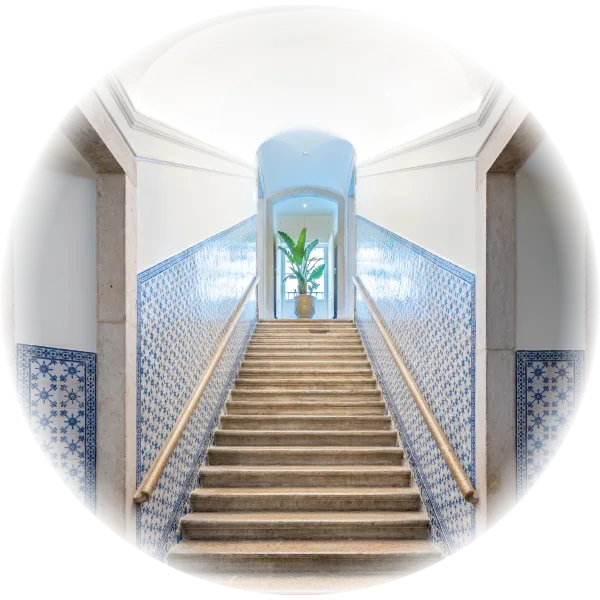
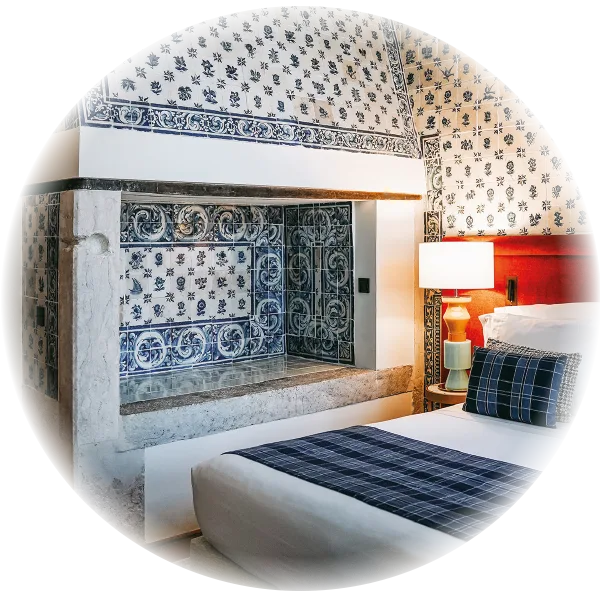
Linked to architecture, two artistic forms stand out in Lisbon: gilded woodwork, of which this Palace has no examples, and tiles (azulejos). Their primary function was to ennoble façades and interior spaces of limited architectural quality, but their significance extends beyond this. Gilded woodwork and tiles participate in the aesthetic program with an impressive theatrical power. Although tiles have been known since Mesopotamian times, they were brought to the Iberian Peninsula during the Arab occupation in the 8th century. However, this art reached its peak in the 17th and 18th centuries. In former conventual churches, inside palaces, or in their gardens, the art of tiling became spectacular and mostly secular in theme—floral patterns, landscapes, blue-and-white motifs, or multicolored panels, marking the definitive decoration of Portuguese Baroque interiors.
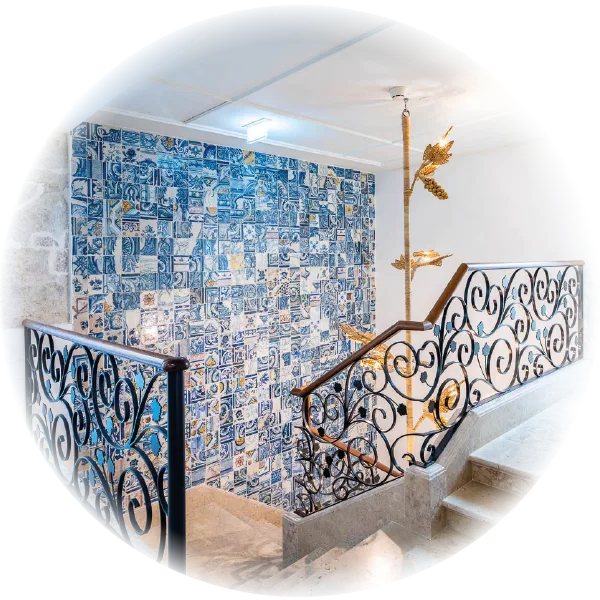
In adapting Palácio Ludovice into a boutique hotel, great care was taken to preserve the building’s original architectural heritage. The tiles found were removed, cleaned, cataloged, restored, and re-applied, with the panel near the restaurant combining imperfect tiles into a perfect 18th-century artwork in a contemporary reinterpretation—where history and luxury, past and present, unite in a unique symbiosis.
In adapting Palácio Ludovice into a boutique hotel, great care was taken to preserve the building’s original architectural heritage. The tiles found were removed, cleaned, cataloged, restored, and re-applied, with the panel near the restaurant combining imperfect tiles into a perfect 18th-century artwork in a contemporary reinterpretation—where history and luxury, past and present, unite in a unique symbiosis.
Related points