Fountain
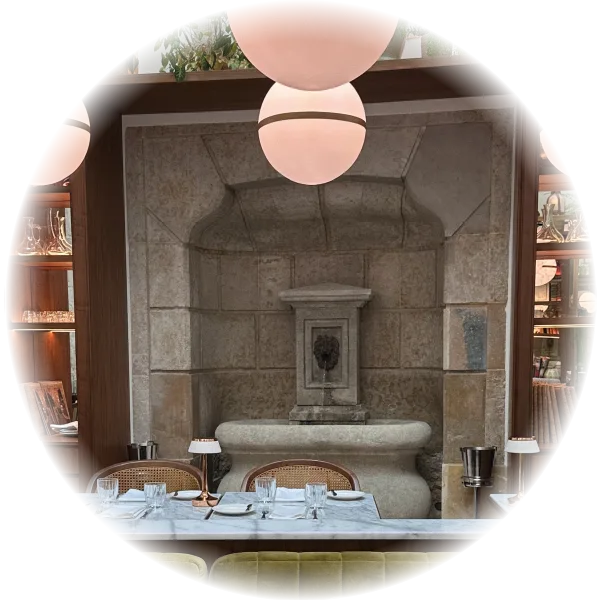
The lion has always been a symbol of strength, power, and prestige. In Christian art, the lion is associated with royalty and divine protection, described in the Book of Revelation as “the Lion of the tribe of Judah” (Revelation 5:5), and is one of the symbols representing Jesus Christ. In the medieval period, the lion was attributed to Saint Mark, and in Baroque sculpture, it would always be placed in palaces—whether as a central sculpture, in a courtyard, in a garden, or, as in this case, in a fountain.
However, if the sculpture is original, the lower part is not… Its degraded state did not allow restoration, so a similar piece was purchased from an antique dealer to give visitors a clear sense of the heritage.
In our restaurant space, the vertical garden follows the height of the building and opens to a magnificent skylight; at the time of the original palace, this was an open space for the passage of servants and the arrival of distinguished guests.
However, if the sculpture is original, the lower part is not… Its degraded state did not allow restoration, so a similar piece was purchased from an antique dealer to give visitors a clear sense of the heritage.
In our restaurant space, the vertical garden follows the height of the building and opens to a magnificent skylight; at the time of the original palace, this was an open space for the passage of servants and the arrival of distinguished guests.
Related points