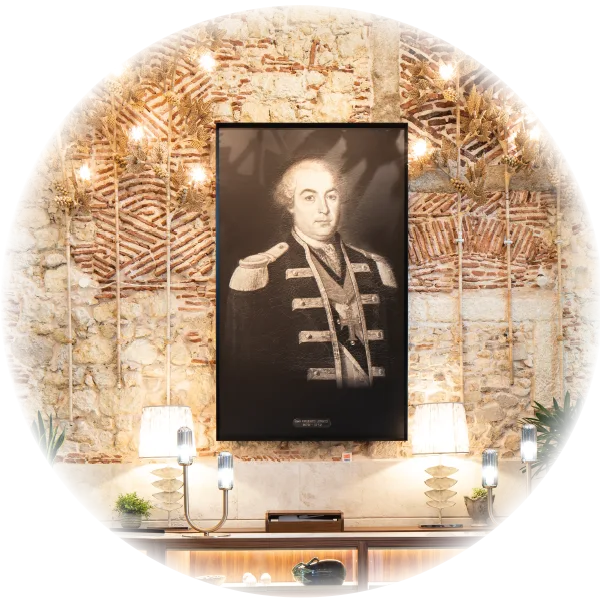
Portrait of João Frederico Ludovice
Johan Friedrich Ludwig was born on March 9, 1673, at Honhardt Castle in Swabia. His father, the administrator of the town that belonged to the free imperial city of Schwabisch Hall, died when Johan was 14 years old. It was then, under the protection of his godfather, a wealthy and enthusiastic builder, that he took his first steps in architecture, coming into contact with the traditional construction of the region, where a wooden frame structure was used—an anti-seismic cage—which Ludovici would later apply in his buildings in Lisbon prior to the 1755 earthquake and which would inspire the famous “Pombaline cage” in the city’s reconstruction.
He began his architectural journey by accompanying his uncle but soon joined a goldsmith’s workshop, which was normal at the time, as arts were developed together—goldsmithing, sculpture, painting, and architecture. As an apprentice, he traveled with his master to Rome in 1697 to work on the decoration of the Church of Gesú of the Jesuits. In Italy, he adapted his name to Giovanni Federico Ludovici, which he adopted upon converting to Catholicism the following year, renouncing Lutheranism. In 1700, now a Catholic, he married Clara Agnese Morelli, daughter of a wealthy merchant.
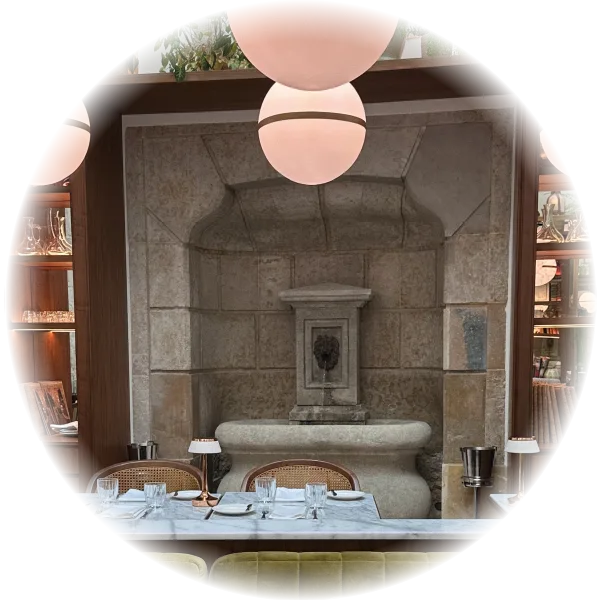
That same year, he arrived in Lisbon and began signing his works as João Federico Ludovice, or simply “Federico,” a name honored today in our restaurant. He came as an exclusive artist for the Jesuits, with works attributed to the Church of Santo Antão, but his fame preceded him, and King D. Pedro II also requested his services. In the early years, Ludovice focused on goldsmithing—designing pieces and either engraving them himself or having them executed in Italy, according to the tradition of the time.
The gold and diamonds from Brazil, combined with the exuberant and grandiose Baroque taste—where every building or sculpture was proof of the King’s power—led to the construction of imposing monuments. One of them was the Mafra Palace-Convent, whose first stone was laid on November 17, 1717, a project he directed until 1730, the year of the Basilica’s consecration. Federico Ludovice served King D. João V as the chief architect of the Kingdom of Portugal, a position officially confirmed only later under King D. José I in 1751. From goldsmith to architect—roles he performed simultaneously—he designed Mafra and the New Patriarchal Church, initiated the first project for the Aqueduct of Águas Livres, carried out interventions at Lisbon Cathedral, and coordinated several architectural projects of the João V era.
In Lisbon, a visit to the Church of São Domingos is essential, nestled in the narrow streets near Rossio. Considered one of the most beautiful in the Portuguese capital, it dates back to the 13th century—hosting royal weddings and baptisms, but also deaths, as condemned individuals were led in procession to the Inquisition’s stake. Much was lost after the earthquake, but the main chapel, signed by Ludovice, survived.
João Federico Ludovice died in 1752: wealthy, respected, and leaving his signature on monuments that remain emblematic in Portugal today. Many others were lost in the earthquake of November 1, 1755, from which a new city would emerge.
A curious detail of his life, revealing a bit of the man behind the artist: in 1700, shortly after marrying, Johan returned to his birthplace, but after serious family disagreements, he left claiming he would go to America. He never contacted his family again; even after his mother’s death in 1729, he never claimed his inheritance. After 30 years, presumed missing, the Hall council declared him dead and distributed his share among his siblings. Johan had, in fact, died… to be reborn as João Federico Ludovice in Lisbon, where he left an indelible legacy that persists to this day.
He began his architectural journey by accompanying his uncle but soon joined a goldsmith’s workshop, which was normal at the time, as arts were developed together—goldsmithing, sculpture, painting, and architecture. As an apprentice, he traveled with his master to Rome in 1697 to work on the decoration of the Church of Gesú of the Jesuits. In Italy, he adapted his name to Giovanni Federico Ludovici, which he adopted upon converting to Catholicism the following year, renouncing Lutheranism. In 1700, now a Catholic, he married Clara Agnese Morelli, daughter of a wealthy merchant.
That same year, he arrived in Lisbon and began signing his works as João Federico Ludovice, or simply “Federico,” a name honored today in our restaurant. He came as an exclusive artist for the Jesuits, with works attributed to the Church of Santo Antão, but his fame preceded him, and King D. Pedro II also requested his services. In the early years, Ludovice focused on goldsmithing—designing pieces and either engraving them himself or having them executed in Italy, according to the tradition of the time.
The gold and diamonds from Brazil, combined with the exuberant and grandiose Baroque taste—where every building or sculpture was proof of the King’s power—led to the construction of imposing monuments. One of them was the Mafra Palace-Convent, whose first stone was laid on November 17, 1717, a project he directed until 1730, the year of the Basilica’s consecration. Federico Ludovice served King D. João V as the chief architect of the Kingdom of Portugal, a position officially confirmed only later under King D. José I in 1751. From goldsmith to architect—roles he performed simultaneously—he designed Mafra and the New Patriarchal Church, initiated the first project for the Aqueduct of Águas Livres, carried out interventions at Lisbon Cathedral, and coordinated several architectural projects of the João V era.
In Lisbon, a visit to the Church of São Domingos is essential, nestled in the narrow streets near Rossio. Considered one of the most beautiful in the Portuguese capital, it dates back to the 13th century—hosting royal weddings and baptisms, but also deaths, as condemned individuals were led in procession to the Inquisition’s stake. Much was lost after the earthquake, but the main chapel, signed by Ludovice, survived.
João Federico Ludovice died in 1752: wealthy, respected, and leaving his signature on monuments that remain emblematic in Portugal today. Many others were lost in the earthquake of November 1, 1755, from which a new city would emerge.
A curious detail of his life, revealing a bit of the man behind the artist: in 1700, shortly after marrying, Johan returned to his birthplace, but after serious family disagreements, he left claiming he would go to America. He never contacted his family again; even after his mother’s death in 1729, he never claimed his inheritance. After 30 years, presumed missing, the Hall council declared him dead and distributed his share among his siblings. Johan had, in fact, died… to be reborn as João Federico Ludovice in Lisbon, where he left an indelible legacy that persists to this day.
Related points