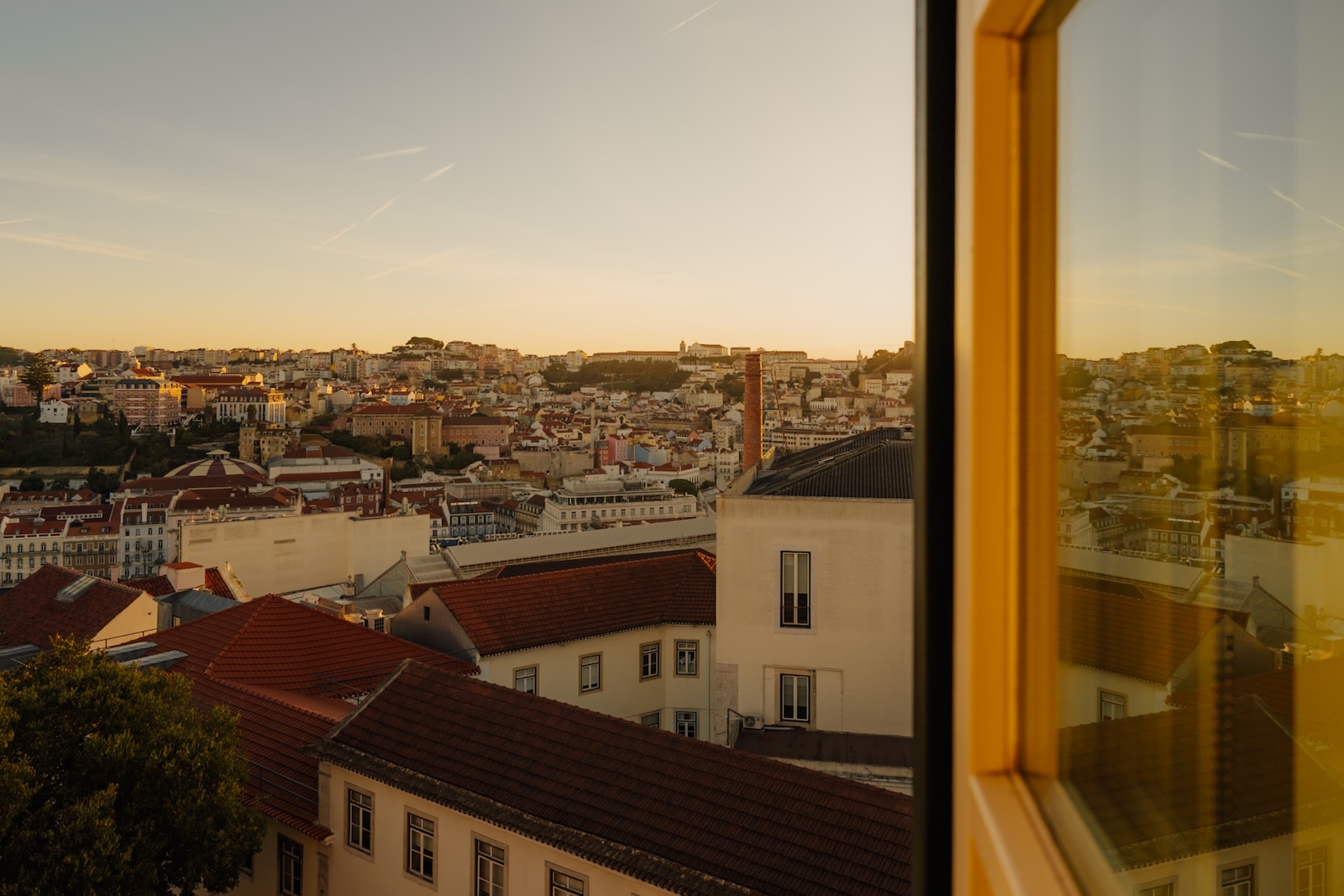
A neighborhood decision guide written by the team of Palácio Ludovice Wine Experience Hotel, from the corner where Chiado, Bairro Alto and Príncipe Real meet. Every walking time below is a walk we make ourselves, every price has a source, and the cons are stated, including our own. It is written for travelers choosing a base at the top end, where the questions change: not whether there is a room, but how quiet it is at 2am, how far the car can come, and what the street feels like at breakfast.
Where should you stay in Lisbon?
Decide the style of stay first, then the area: historic boutique conversions, strongest on character and position, concentrate in Chiado, around its border with Bairro Alto and Príncipe Real, and in Alfama, while larger full-service hotels, strongest on space and facilities, line Avenida da Liberdade and the modern riverside. For a first visit most travelers do best in or around Chiado; for the flattest base choose Baixa; for romance, Alfama; with young children, Parque das Nações or a beach base in Cascais.
That is the short answer the front desk gives when guests ask where friends should stay on their next trip. The long answer is this guide: eleven areas, compared honestly, with the walking distances, the noise, the hills and the practical costs that most lists leave out.
In this guide:
- Where should you stay in Lisbon?
- The areas at a glance
- How we wrote this guide
- Chiado: the first-timer’s default
- Bairro Alto: lively by night, a village by day
- Príncipe Real: leafy, design-led, five minutes from us
- The corner where they meet: our case, with distances
- Baixa: flat, grand and convenient
- Alfama and Graça: the romantic hills
- Cais do Sodré and Santos: riverside and late
- Avenida da Liberdade: the boulevard
- Estrela, Lapa and Santos above: embassy quiet
- Belém: monuments by the river
- Parque das Nações: modern Lisbon for families
- Should you stay in Cascais or Sintra instead?
- When you visit changes where you should stay
- What to check before booking a luxury hotel in Lisbon
- The practical part: taxes, fares and getting in
- Questions guests ask us
The areas at a glance
| Area | Stay style to consider | Main advantage | Check before booking |
| Chiado | Intimate boutique conversions | Everything on foot | Street-side rooms on the busy squares |
| Bairro Alto | Small guesthouses, a few upscale addresses | Character and views | Distance to the bar streets at night |
| Príncipe Real | Design-led boutiques | Leafy calm near the center | The uphill walk back |
| Baixa | Larger mid-range and business hotels | Flat and connected | Evenings can feel empty |
| Alfama and Graça | Small historic conversions | Atmosphere and lookouts | Room size and stair access |
| Cais do Sodré | Modern conversions by the river | Food and late nights | Proximity to the bar block |
| Avenida da Liberdade | Larger five-star flagships | Space, cars, shopping | Road noise on the avenue itself |
| Estrela and Lapa | Quiet residential boutiques | Quiet streets and gardens | Distance to the sights |
| Belém | Riverside hotels near the museums | Morning light, river paths | Thin dinner options, quiet evenings |
| Parque das Nações | Spacious modern hotels | Flat, spacious family ground | 20 minutes from the old city |
| Cascais / Sintra | Resort properties and quintas | Pools, grounds, sea or hills | Train times for city evenings |
How we wrote this guide
We answer this question for a living. Palácio Ludovice stands directly opposite the São Pedro de Alcântara viewpoint, at the exact point where Chiado, Bairro Alto and Príncipe Real meet, and the question guests ask most at our front desk, after the wine, is where a friend or a parent should stay next time. So this guide carries an obvious interest, and we handle it the only honest way: we recommend other areas where they fit better and we state the cons of our own corner, our own parking included.
Distances below are walks we make daily, not map guesses. Prices and transport facts carry sources and a visible update date, because this page is maintained, not published and forgotten.
Chiado: the first-timer’s default
Chiado is the neighborhood most guides point first-time visitors toward, and the one our own front desk suggests most often, with reason. It sits halfway up the western hill, which means you walk down into Baixa and up into Bairro Alto in minutes, the Baixa-Chiado metro station connects you to the Blue and Green lines, and the streets themselves are the attraction: Livraria Bertrand, trading since 1732 and described as the country’s oldest bookstore, the Paris em Lisboa garment store, and A Brasileira, pouring coffee since 1905 beside the bronze statue of Fernando Pessoa.
The trade-off is popularity. The squares around the Santa Justa lift and the Armazéns do Chiado mall run busy from mid-morning, and rooms here price accordingly. Walk two streets uphill, toward Carmo or toward our corner, and the crowd thins while the convenience stays. From our door, Chiado’s heart is 8 minutes on foot and the Carmo ruins are 10. At the top end, Chiado’s stock runs to intimate boutique conversions rather than large hotels, so the best addresses sell out first; the compensation is some of the city’s Michelin-starred tables within a short walk.
Bairro Alto: lively by night, a village by day
Bairro Alto’s grid was laid out in the 16th century, and after the 1755 earthquake it filled with workshops, small shops, taverns and newspaper offices, the mix that still gives it character. By day it is quiet, washing on balconies, tiled facades, painted doors. After dark its central streets become Lisbon’s bar district, and the crowd stands in the street with glasses in hand until the bars wind down around 2 to 3am.
Stay here for the energy and the views, with eyes open: on weekend nights the bar streets are in full voice until the small hours, which is exactly what their crowds come for; the hill means stairs or a climb to reach transit, and room options are fewer than in Chiado or Baixa. The district rewards the curious far beyond its nightlife reputation, and we wrote our complete Bairro Alto guide for exactly that: eating, seasons, quiet corners, and an honest section on staying here, street by street. If you stay inside Bairro Alto, choose the hotel and the room’s position with more care than the neighborhood name alone: ask about the nearest bar streets, which way the room faces, and how a car reaches the door. We sit on the district’s calm upper edge by the viewpoint, which is our own answer to that equation, described next.
Príncipe Real: leafy, design-led, five minutes from us
A short walk up from Bairro Alto, Príncipe Real is where Lisbon’s designers, architects and concept stores settled, around gardens where locals take coffee at the kiosks. It is one of the city’s most exclusive addresses, and it feels it: calmer streets, antique shops, restaurants that fill with residents rather than tour groups. Antique dealers and ateliers make it the neighborhood where guests shop for the home rather than the suitcase.
As a base it suits couples and anyone who values quiet over bustle. The gentle catch is position: you are above the center, so most sightseeing starts with a downhill walk and ends with a climb, softened by the Rato metro at the top of the district and the small 24E tram that runs from Camões square up through Príncipe Real toward Campolide. From our front door the gardens are 5 minutes on foot.
The corner where they meet: our case, with distances
If you ask us, and guests do ask, the strongest base in Lisbon is not one neighborhood but the point where three of the best ones touch: the top of Rua de São Pedro de Alcântara, where Chiado, Bairro Alto and Príncipe Real meet, directly opposite the São Pedro de Alcântara viewpoint. That is an opinion, so here is the argument in numbers rather than adjectives. From this corner, on foot: the viewpoint is 0 minutes, the Igreja de São Roque 2, Príncipe Real’s gardens 5, the heart of Chiado 8, the Carmo ruins 10, the Santa Catarina lookout 12.
Shopping runs in three directions, as our front desk tells guests daily: down into Chiado for the historic shops, up into Príncipe Real for concept stores and design, and down the other slope to Avenida da Liberdade, the boulevard our desk calls Lisbon’s Champs-Élysées, for the international flagships. The corner is also why a stay here can be built around wine without a single taxi: the daily wine tasting in Lisbon pours at 5.30pm inside the palace, the Solar do Vinho do Porto opened within these walls in 1946 and today offers a selection of around 150 Port and Douro wines, and Federico pairs dinner at the table before you climb to one of 61 rooms and suites. The palace keeps its frescoes and 18th-century tile panels, restored under Miguel Câncio Martins, and holds the Michelin Key for a second consecutive year, the Guide’s distinction for outstanding stays.
And the cons, because every corner has them: the bar streets of Bairro Alto begin a few blocks behind us, in full celebration until 2 to 3am on weekends, a gift when you want the night and something to plan around when you want ten quiet hours; reaching the corner means a hill from whichever direction you arrive; and the palace, a wine hotel in Lisbon in a listed 18th-century building, has no on-site garage, so drivers should ask our reservations team before arrival about nearby parking options and charges. For guests who value a central base, historic surroundings and evenings built around wine and dining, this is a location we recommend with confidence.
Baixa: flat, grand and convenient
Baixa is the gridded downtown rebuilt by the Marquês de Pombal after the 1755 earthquake, and it remains the easiest place in Lisbon to be a visitor: flat streets, two metro lines, and Rossio station, where the Sintra trains leave, in the middle of it. If stairs and slopes are a concern, or the trip is short and sightseeing-dense, Baixa is the rational choice.
What it offers in convenience it lacks in neighborhood life. Much of Baixa caters to visitors and evenings are quiet once the shops close; the older, livelier character tends to sit up the hills on either side, a trade many happily make for flat convenience. Many travelers settle the question by sleeping flat in Baixa and spending their days and evenings in Chiado, Bairro Alto and Alfama, which works, as long as you accept the commute uphill to the fun.
Alfama and Graça: the romantic hills
Alfama is Lisbon’s oldest quarter, a maze of lanes below the castle where fado drifts from doorways and every few corners open onto a lookout. It survived the earthquake better than downtown, which is why it still feels medieval, and it is the city’s most atmospheric place to wake up. Graça, the hill above it, keeps similar views with fewer visitors.
The romance has terms and conditions. The lanes are steep and cobbled, cars cannot reach many doors, hotel options are limited, and the famous tram 28 that crosses the district runs full with visitors for most of the day, and because the buildings are old and protected, room sizes and layouts vary enormously between categories: compare the actual room, not the romance of the address. In mid-June the terms invert: the Santo António festivities around June 12 and 13 turn Alfama into the loudest, happiest place in Portugal, wonderful to visit, and light sleepers will want to plan their June nights around it. Couples who prize atmosphere over convenience will be happy here; travelers who prioritize easier access may prefer another base and explore Alfama by day or in the evening.
Cais do Sodré and Santos: riverside and late
Cais do Sodré sits flat on the river below Chiado, home to the Time Out Market’s food hall, the station for the Cascais line, and a nightlife strip around the famous pink-painted street that runs even later than Bairro Alto. Santos, just west, softens into design showrooms and quieter dinner streets.
Stay here for food and late nights with flat logistics. Light sleepers should keep a street’s distance from the bar block, and anyone expecting postcard Lisbon should know this stretch is more converted warehouse than tiled alley, part of its appeal, not for everyone.
Avenida da Liberdade: the boulevard
Lisbon’s grandest avenue runs wide and tree-lined for about a kilometer, from Restauradores up to the Marquês de Pombal roundabout, lined with the international flagships and most of the city’s larger five-star properties. It is flat, served by the Avenida and Marquês de Pombal metro stations, and a 10 to 15 minute walk from the historic center it borders. It is also the easiest central address for a car, though drop-off and parking arrangements still differ hotel by hotel, so confirm them when you book.
Choose it for shopping, space and hotel infrastructure at scale. What it offers less of is neighborhood texture: the avenue reads as a grand address more than a quarter, polished by day and quiet by night, which suits some trips perfectly and leaves others wishing they had slept inside the old city.
Estrela, Lapa and Santos above: embassy quiet
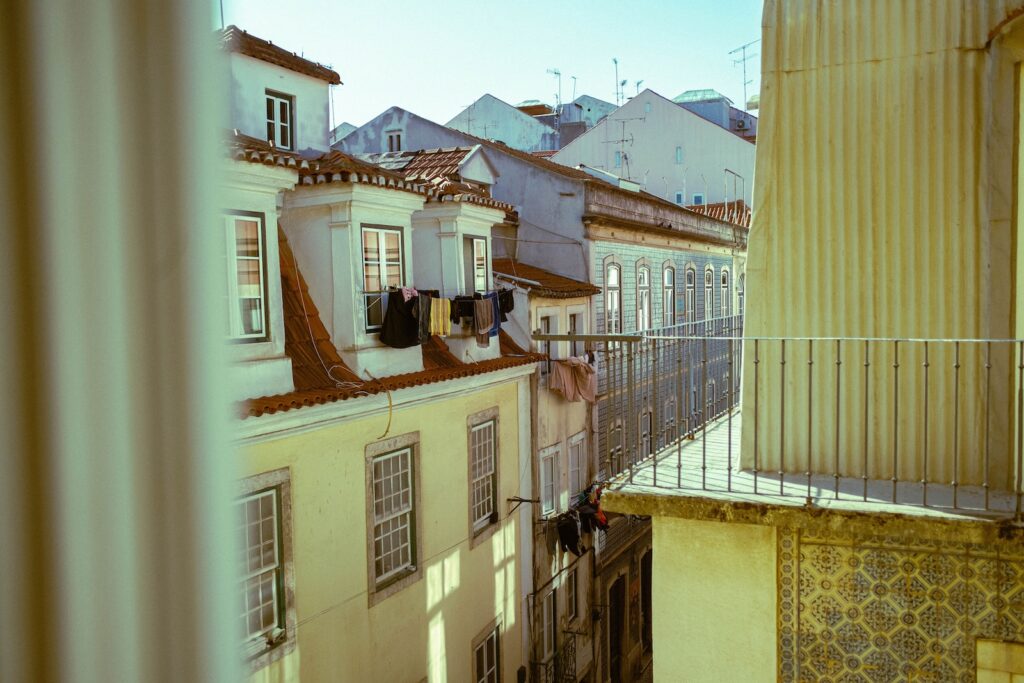
West of the center, Estrela and Lapa roll through embassy streets, the basilica and its garden, and some of the city’s most dignified residential blocks. This is where stays get calm: tree shade, local cafes, almost no tour groups.
The cost is distance. You will ride the tram 25 or a taxi to most sights, and evenings near your bed will be peaceful to the point of sleepy. It suits longer stays, repeat visitors, and anyone for whom a quiet street outranks a central one.
Belém: monuments by the river
Belém holds the Jerónimos Monastery, the Belém Tower and a riverside string of museums about 6 km west of the center, reached by tram 15 or the Cascais-line trains. Mornings here, before the day-trip crowds arrive, are among the best Lisbon offers.
As a base it is a specialist’s choice: unbeatable for museum lovers and runners who want the river path at the door, remote for everyone else, since dinner and nightlife options thin out and every evening in the center means a ride back.
Parque das Nações: modern Lisbon for families
Built for the 1998 world exposition, Parque das Nações is the city’s modern riverside quarter: wide flat promenades, the Oceanarium, playgrounds, and spacious newer hotels, all around Oriente station’s direct metro and rail links, including the airport three stops away on the red line.
Families with strollers, travelers who want broad, level ground underfoot, and anyone arriving late or leaving early will find it the easiest version of Lisbon. Its public spaces are wide and level. Anyone needing fully step-free access should still confirm the specific hotel entrance, room and route; the Metro advises checking station lifts before you travel. The historic city is a 20 minute metro ride away. That is exactly the point, and exactly the drawback.
Should you stay in Cascais or Sintra instead?
Both are about 40 minutes from Lisbon by direct train: Cascais from Cais do Sodré, Sintra from Rossio. Both work as bases for travelers who have seen Lisbon before. Cascais gives beaches, a walkable old town and summer ease for families. Sintra gives palaces in cool, wooded hills, and the early start that beats the crowds filling its monuments by noon.
For a first visit we advise against basing in either. You would spend your best evening hours on a train while Lisbon’s lights come on without you. Day trips in both directions are simple from the city. Our front desk arranges them daily, including private walking and food tours with hand-picked local guides for those who want the stories told properly.
When you visit changes where you should stay
Season moves the answer more than most guides admit. In mid-June, the Santo António nights around the 12th and 13th fill Alfama, Graça and Bairro Alto with music until morning: book those districts to join the party, or sleep above it all and stroll down. July and August heat makes the hill districts honest work by afternoon, an argument for flat Baixa, the riverside, or anywhere with a pool and a plan to move in the mornings.
From November to March, rain polishes the cobbles and the hills get slippery, which favors central, flat bases and good shoes. And in September and October the wine country within an hour of the city comes alive for the vindima; if that tempts you, our guide to the wine harvest around Lisbon covers where to live it and how to taste it without leaving the city.
What to check before booking a luxury hotel in Lisbon
Whichever area wins, five checks separate a good booking from a disappointing one in a city of converted palaces and steep streets. We answer these at our own desk daily, so we include how they play out at our address as the worked example.
The room itself, not the category name
Inside historic buildings, size and layout vary enormously within one category. Ask which way the room faces and what is outside the window; our reservations team expects exactly that question and talks positions through before you book.
Noise, specifically
As in any European capital, Lisbon’s central districts carry more life at night than the outskirts; that is part of what central means. The labels still mislead: every central district holds lively corners and silent streets, so ask about the nearest bars and what weekend nights sound like. We tell guests honestly that Bairro Alto’s bar streets, a few blocks behind us, keep the party going until 2 to 3am.
Arrival, luggage and parking
Narrow streets and historic facades mean the car question needs asking everywhere in the old city. At our door a car can stop for luggage; the palace has no on-site garage, so contact our reservations team before arrival to check nearby parking options, current charges and availability. Whatever the address, confirm the drop-off and the parking before you land.
The facilities you will actually use
Facilities vary by property, not by neighborhood: check that the pool, spa, gym or parking you want actually exists at the hotel, whether access is included, and whether any of it is seasonal. Ours runs to the Caudalie Boutique-Spa, a gym, Federico’s dining room and the Solar’s selection of around 150 Port and Douro wines; there is no pool, which is exactly the kind of fact to check anywhere before you book.
What must be booked ahead
The best tables, treatments and tastings in Lisbon sell out quietly. At ours, the daily 5.30pm tasting holds ten seats and is best reserved a day or two ahead; ask any hotel which of its experiences need the same.
The practical part: taxes, fares and getting in
Lisbon charges a municipal tourist tax of 4 euros per person per night, doubled from 2 euros in September 2024, capped at seven nights per stay, with guests under 13 exempt; your hotel adds it to the bill, so budget it into comparisons (source: The Portugal News). From the airport, a metered taxi to the center typically runs 15 to 20 euros today, and an optional fixed-fare taxi voucher prices the same ride at 16 to 23 euros depending on the destination zone and time, luggage and up to four passengers included; we keep the full breakdown of both regimes in our Bairro Alto guide’s airport section. The front desk arranges private airport transfers at extra cost, and private walking and food tours with hand-picked local guides.
For rail days, Rossio station serves Sintra and Cais do Sodré serves Cascais, each a direct ride of about 40 minutes on CP, Portugal’s national rail operator. The Baixa-Chiado metro station covers both downtown and Chiado with exits at each level of the hill, Avenida and Rato stations serve the boulevard and Príncipe Real, and most central districts are best crossed on foot, which in Lisbon always means choosing your hill wisely. Station lift and access status is listed by Metropolitano de Lisboa.
Questions guests ask us
Where should I stay in Lisbon for the first time?
Chiado, or its upper border where it meets Bairro Alto and Príncipe Real. You get walkability, the metro, cafes and viewpoints without committing to the liveliest streets or the steepest hills.
Is Chiado a good place to stay?
Yes, for most visitors it is the best balance in the city: central, well connected and full of life by day. Its busiest squares carry crowds and prices to match, so look a street or two uphill for calmer rooms.
Can you sleep well in Bairro Alto?
Yes, if you choose your street: how much night noise reaches a room depends on the block, not the district. The central bar streets celebrate until 2 to 3am on weekends; on the edges, and above toward the viewpoint and Príncipe Real, nights are far calmer. Our Bairro Alto guide maps this honestly, street by street.
What is the best area for families with kids?
Parque das Nações for flat promenades, playgrounds and the Oceanarium, or Cascais in summer for the beach. In the center, Baixa’s flat grid is the practical pick with a stroller.
How long should I stay in Lisbon?
Three to four full days covers the central districts, the viewpoints and one day trip to Sintra or Cascais. A week lets you add Belém properly, a second day trip and slower evenings.
Is Alfama a good base?
For romantics who accept steep lanes, limited hotel choice and a walk to everything, our corner above the viewpoint makes the case: a tasting at 5.30pm, Chiado 8 minutes downhill, the castle across the valley at breakfast. For convenience, choose Chiado or Baixa and give Alfama your evenings instead.
Which area has the best location in Lisbon?
Our answer, argued with distances above, is the corner where Chiado, Bairro Alto and Príncipe Real meet at the São Pedro de Alcântara viewpoint: three districts, the metro and the city’s heart all within a 12 minute walk. Others reasonably argue for Baixa’s flatness or Alfama’s atmosphere; this guide gives you the numbers to decide.